Learning Cycles Explain How Learning Works. Instructional Frameworks Make It Teachable.
By Betsy Kostolni, M.S.Ed., of Learning Experience Strategist Services
When learning feels unclear or inconsistent, the issue is rarely effort.
It’s usually design.
Educators, institutions, and organizations understand that learning unfolds over time. Learners don’t absorb information all at once. They need purpose, clear explanations, opportunities to practice, and chances to apply what they are learning in meaningful ways.
This is why learning cycle models appear so frequently in education and training.
Learning cycles explain how learning works.
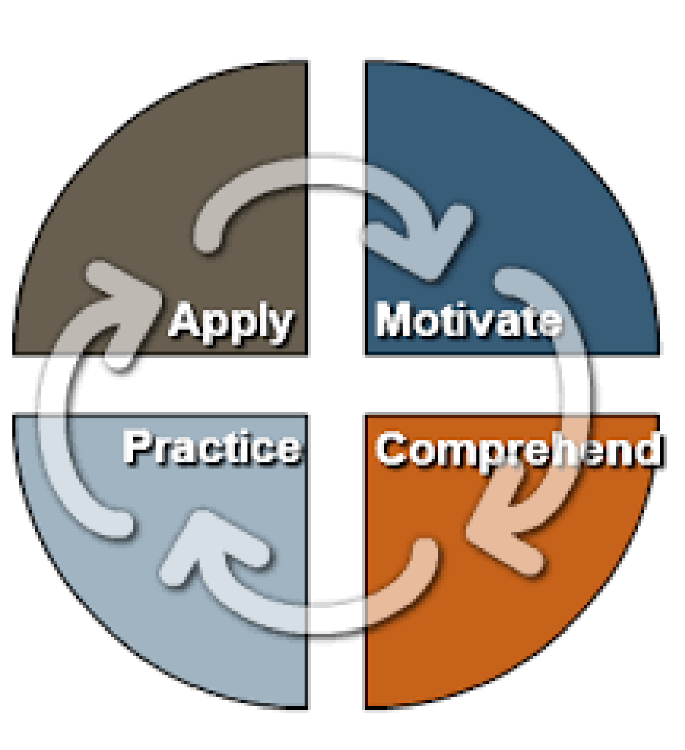
Worldwide Instructional Design System’s Learning Cycle: Motivation, Comprehension, Practice, Application.
But understanding a learning cycle does not automatically lead to effective instruction.
Understanding Learning Is Not the Same as Designing for It
Many educators can describe how learning happens. They understand the importance of motivation, comprehension, practice, and application. Yet lessons can still feel confusing, disjointed, or rushed.
The gap often appears in the space between theory and instruction.
Knowing how learning unfolds is different from designing lessons that consistently support that process. Without a clear instructional framework, learning cycles remain conceptual rather than actionable.
This is where learning often breaks down quietly.
Not because educators lack knowledge or skill.
But because structure is missing where it matters most.
Designing Across Levels
Effective learning design requires intention across the learning system.
At the curriculum level, alignment provides direction through learning outcomes, evaluation methods, success criteria, and specific objectives that clarify what learners are working toward and how success will be measured. This kind of alignment creates coherence and purpose.
At the lesson level, instructional structure determines the experience. Lessons are where learners engage with new ideas, practice skills, and apply understanding. Without a consistent approach to lesson design, even well-aligned curricula can result in uneven learning experiences.
Learning cycles connect these two. They describe the patterns through which learners build understanding by revisiting ideas, practicing, applying, and refining over time.
The alignment framework determines the knowledge and skills learners are working toward. Learning cycles describe how that learning develops. Instructional frameworks translate both into intentional lesson design.
All three matter.
From Theory to Instruction
The goal is not to adopt more models or add complexity.
The goal is to design learning intentionally so that alignment, learning cycles, and instruction reinforce one another.
Learning cycles describe how learning develops through iteration. Instructional frameworks provide the structure that supports that process in daily practice.
When alignment and instructional frameworks are intentionally paired, learners experience greater clarity. Instruction feels more coherent. Engagement increases. Understanding deepens.
Strong learning experiences don’t happen by accident.
They are built through intentional design.
A Final Thought
Learning cycles help us understand how learning works.
Instructional frameworks help make that understanding teachable.
When design decisions are made with intention, learning becomes clearer, more meaningful, and more effective for everyone involved.
This blog reflects the work and perspective of Learning Experience Strategist Services. Learn more at https://domorewithless.net
